Insights12 May 2025
What is Experiential Graphic Design (EGD)?
Read more
Insights · 18 February 2025
Car parks are designed around movement and function. But when three buildings, multiple entrances, cyclists and pedestrians share the same space, environmental graphic design can turn a complex journey into something clear, distinctive and enjoyable.
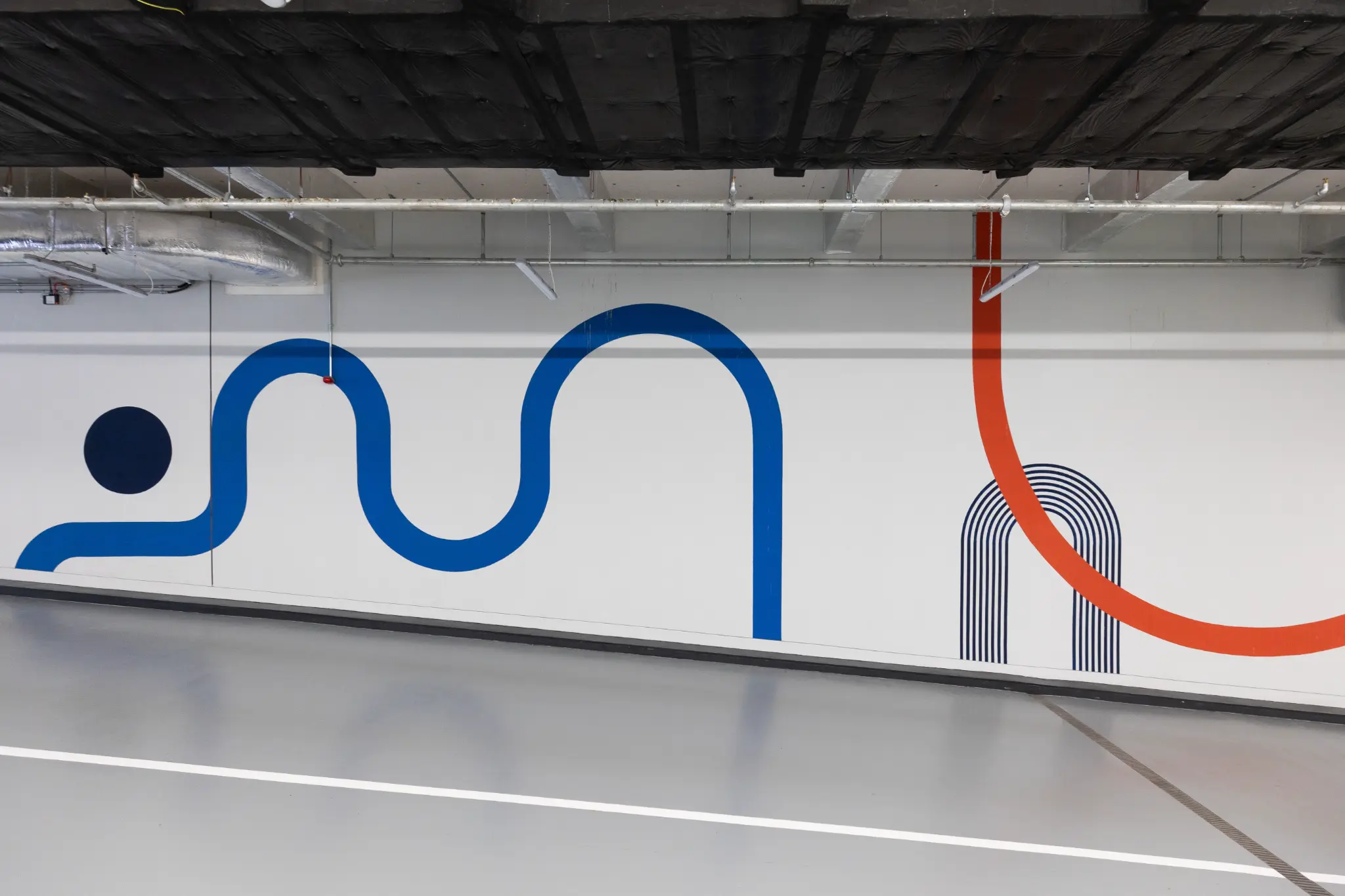
Environmental graphic design can organise movement, reinforce identity and make overlooked spaces feel considered. In a car park, where routes become confusing, graphics and wayfinding have a practical role as well as a visual one. For IPUT's three-building Wilton Park development, we delivered a full wayfinding and signage package across a shared, single-level car park, bike storage and core areas. The challenge was to make the space intuitive for multiple user groups while meeting LEED and WELL requirements. The result combines colour-coded hand-painted murals, floor graphics and an illuminated core signage system that makes movement through the car park clear.
The result is a bold, colour-coded graphic system that gives each building its own identity while transforming the shared car park into a coherent, memorable environment.
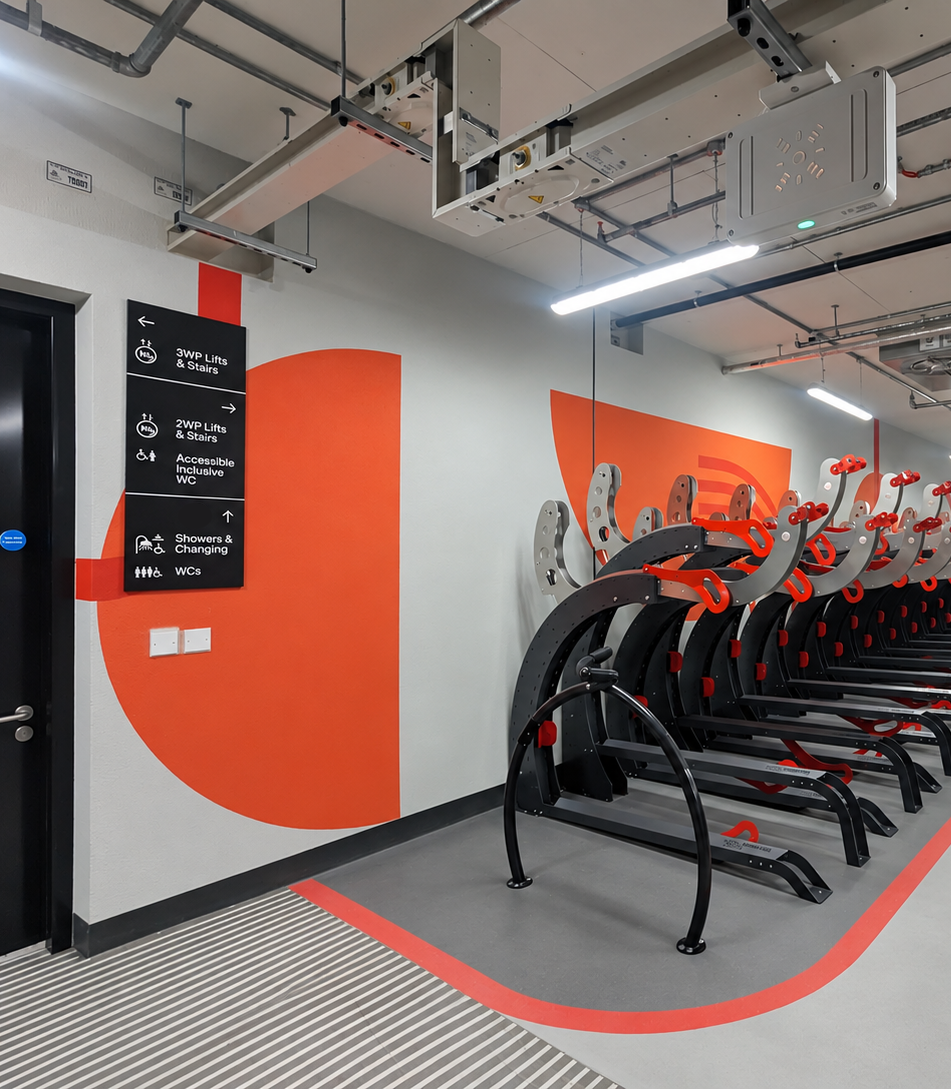
Bold graphic wall and floor mural, IPUT Dublin commercial development.
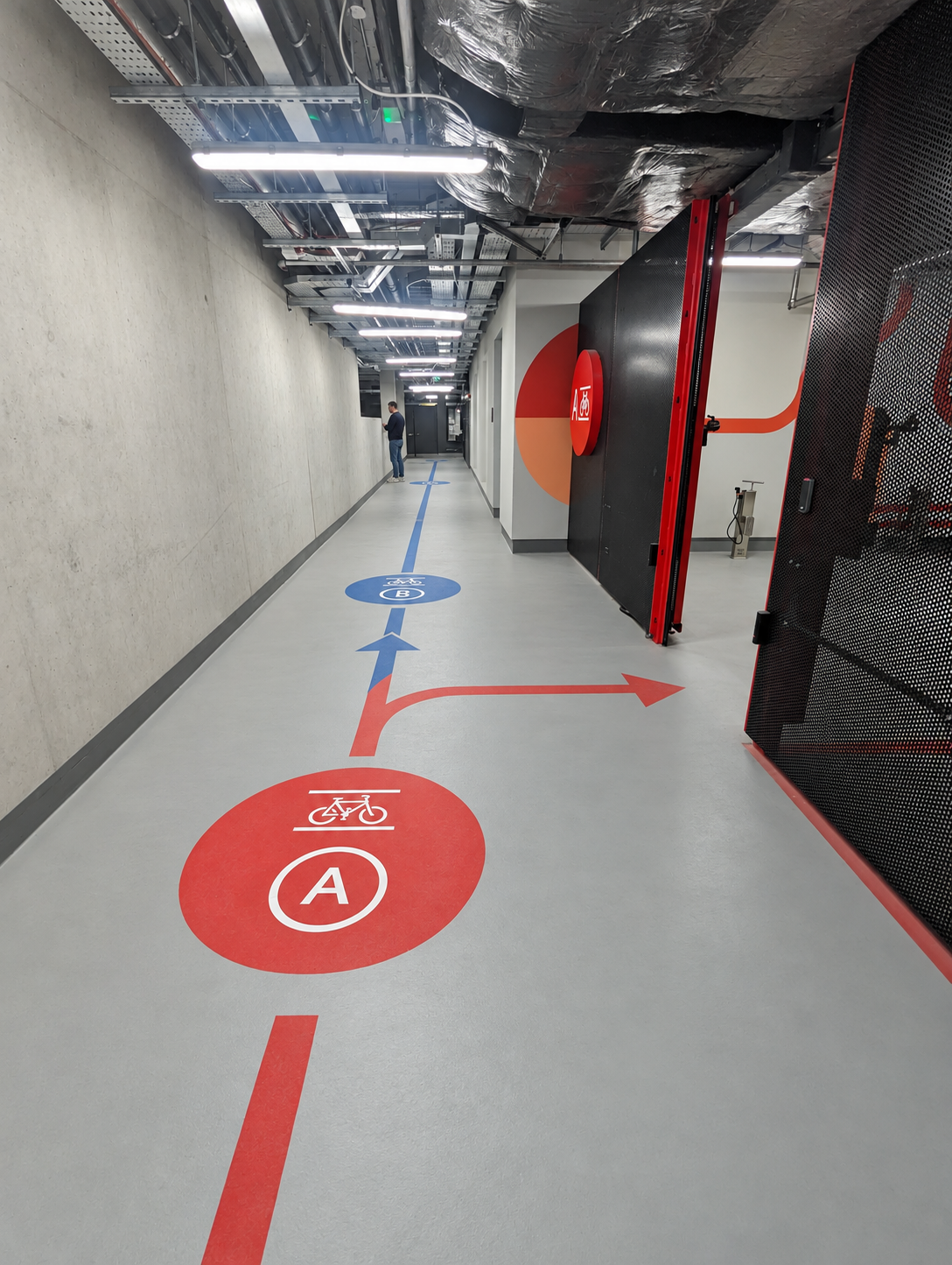
Floor wayfinding, IPUT Dublin commercial development.
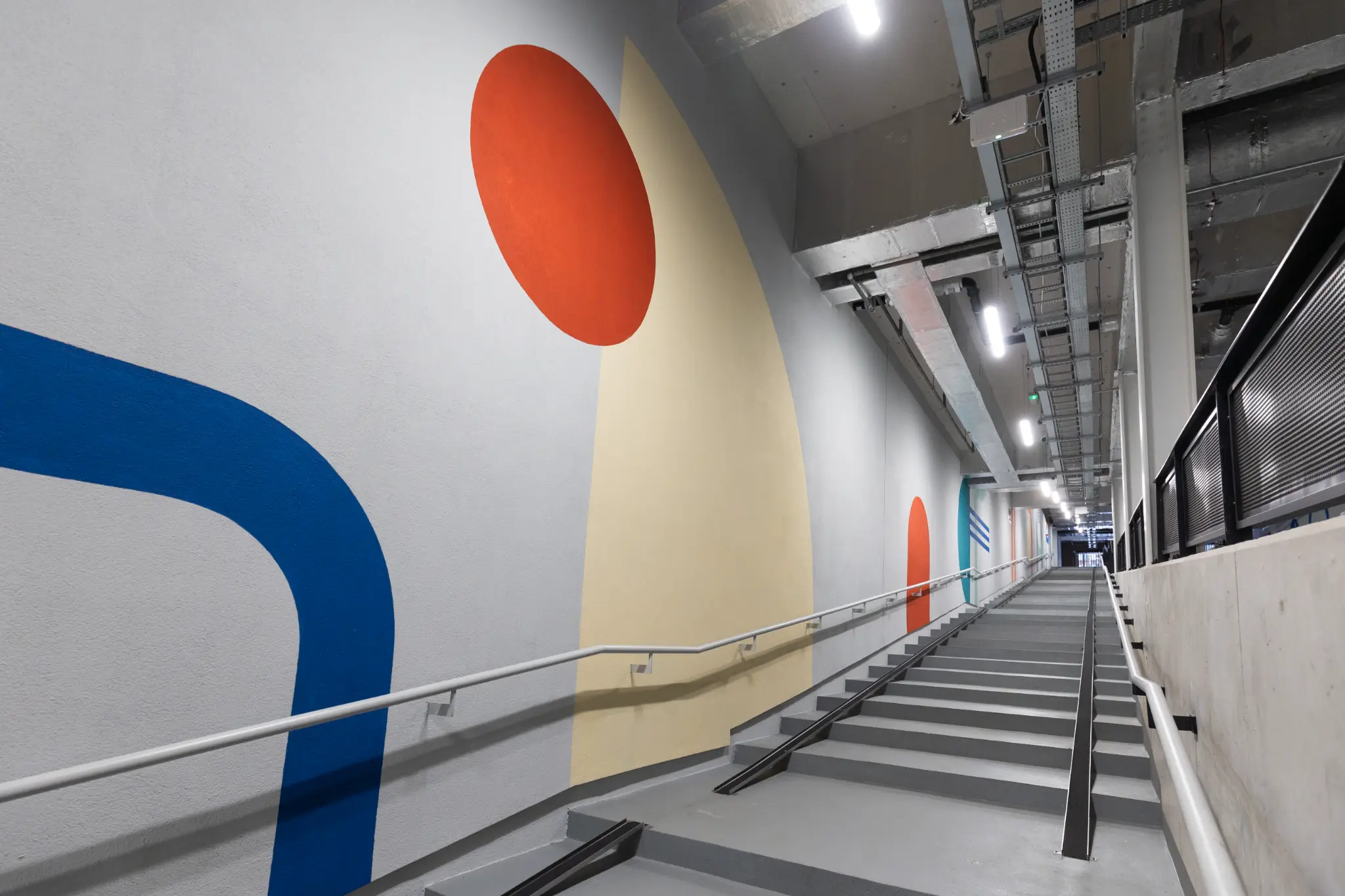
Mural detail, IPUT Dublin.
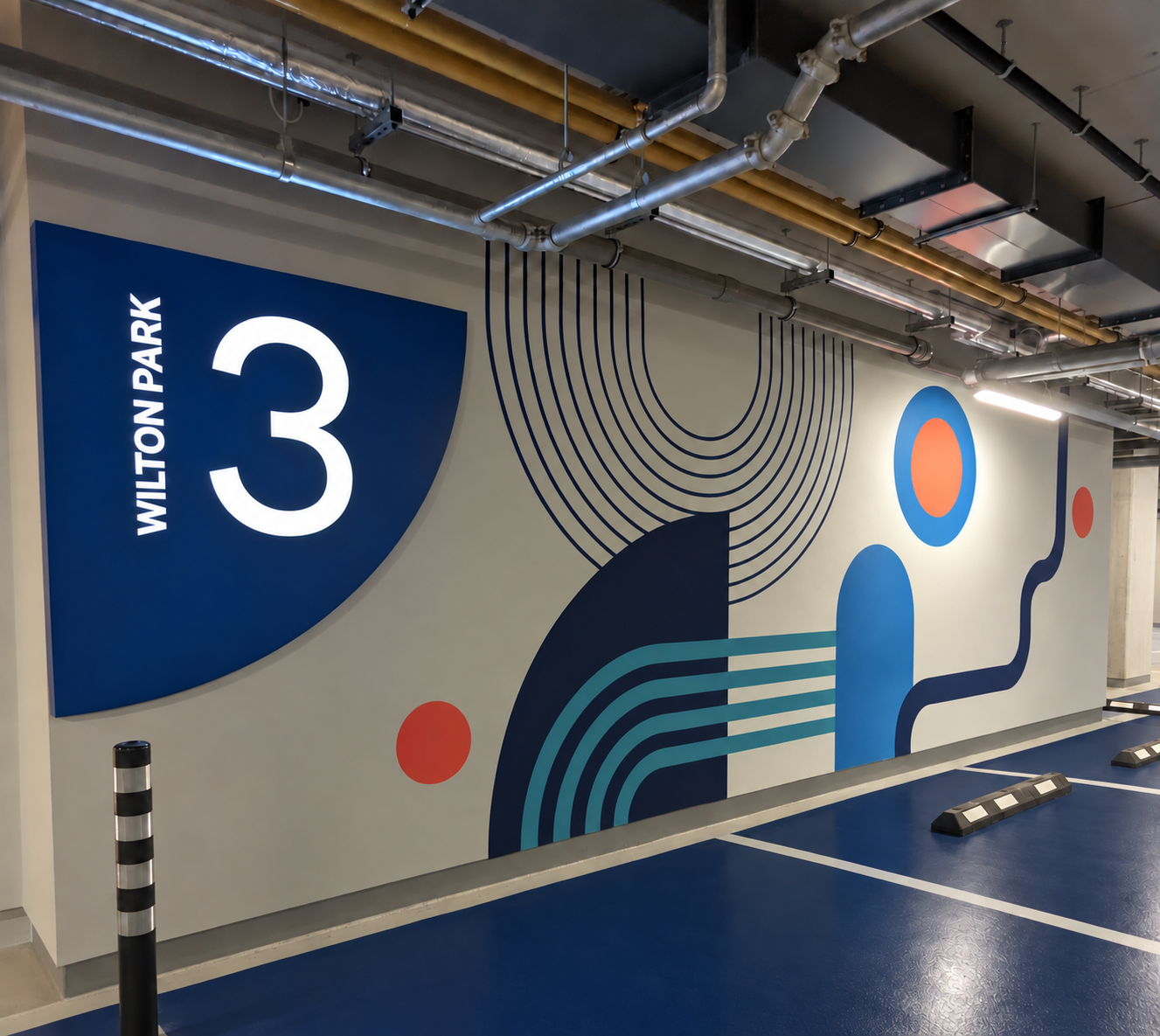
Hand-painted mural and core identification signage, IPUT Dublin.
The design started with how people move through the space. Drivers, cyclists and pedestrians arrive from different points and need to know instantly where they are, which building they're heading for, and how to get there. Rather than treating graphics and signage as two separate systems, we developed a single visual language across walls, floors and every decision point. Large-scale colour marks the long routes, while directional graphics tie together entrances, cycle areas and the three buildings. The hand-painted murals shift the atmosphere entirely - a functional route becomes a sequence of recognisable moments, giving people the visual cues they need to navigate without thinking about it.
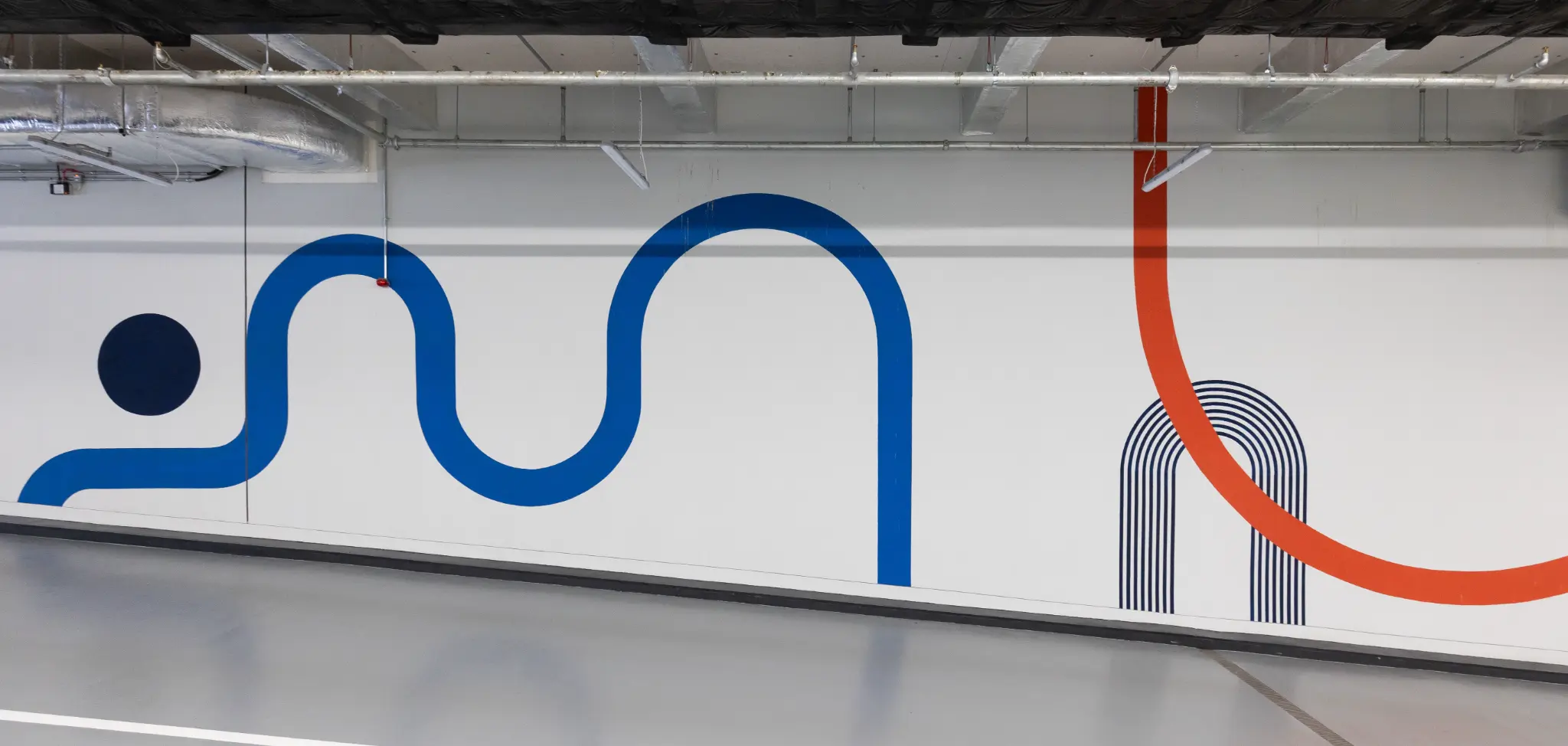
Large-scale car parking mural, IPUT Dublin commercial development.
“Good environmental graphics do more than decorate a car park. They make movement clearer and the experience more memorable.”
Seek Design Studio
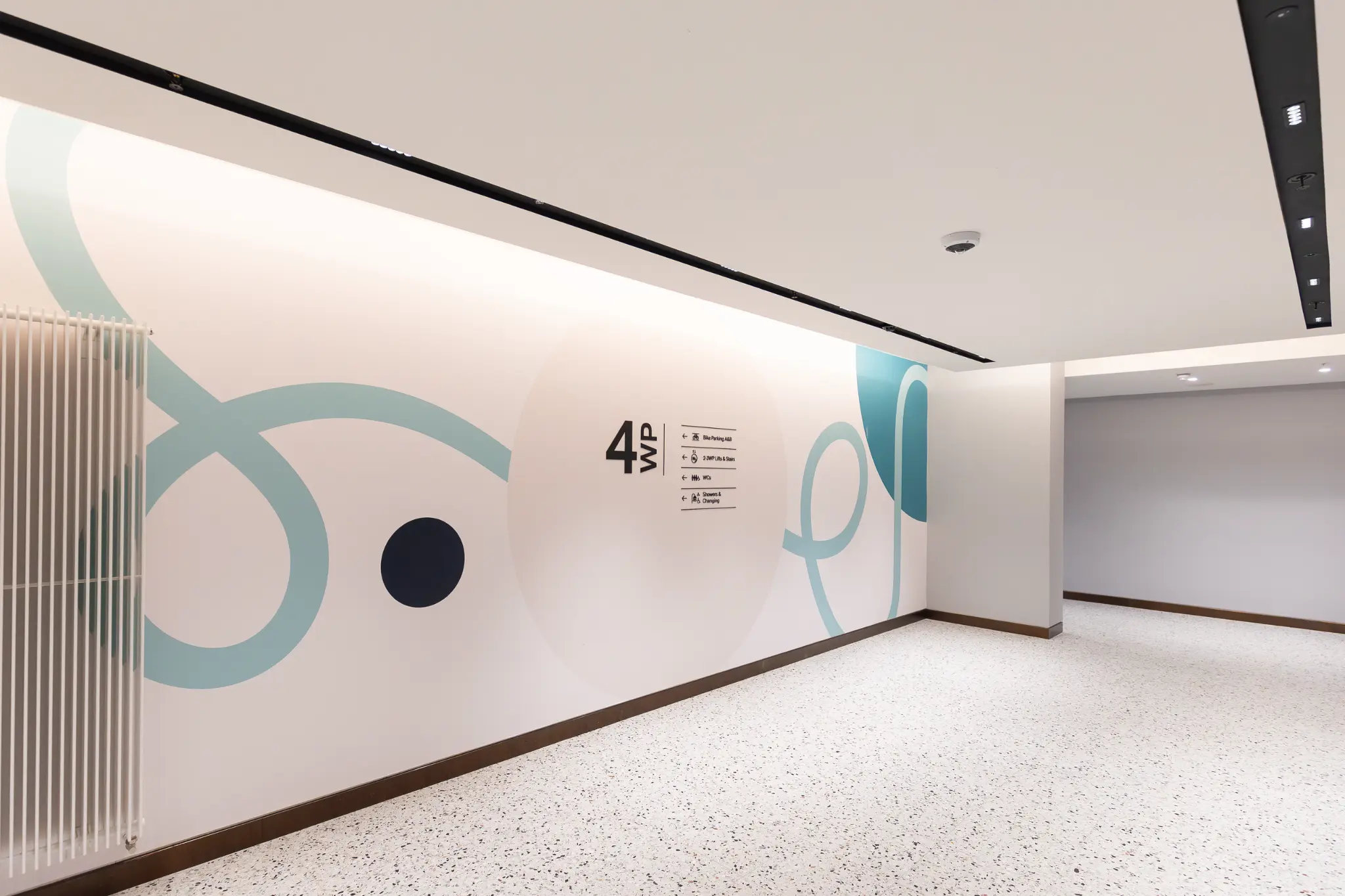
Wayfinding with wall graphics, IPUT Dublin.
Wayfinding works best when it feels part of the space. Directional lines, floor graphics, signs and landmarks work together to guide drivers, cyclists and pedestrians between entrances and buildings. The result is clearer navigation without unnecessary layers of signage.
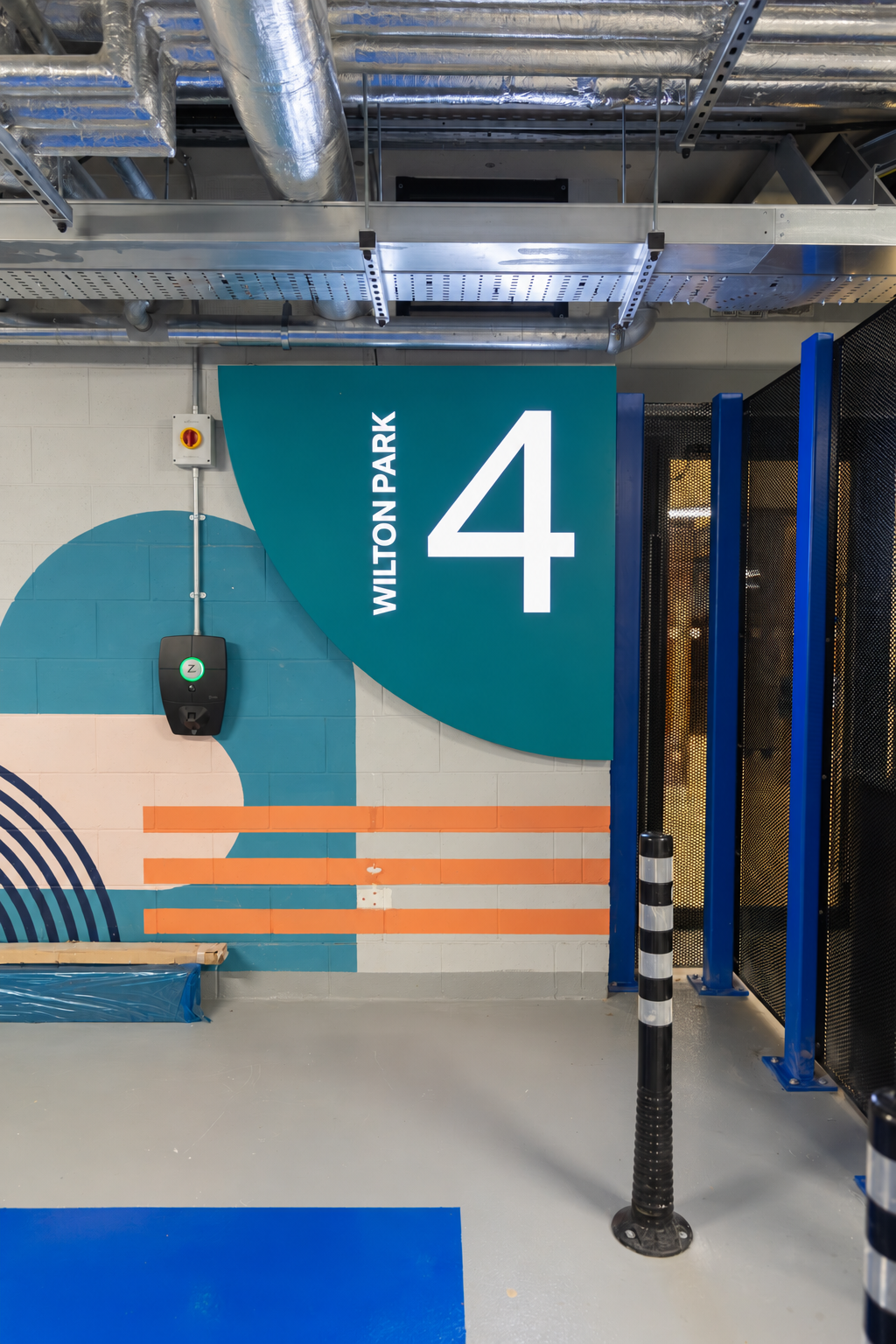
Hand-painted mural, IPUT Dublin.
Large-scale murals can shift the character of a car park. Used at the right scale and in the right locations, they animate long walls, create landmarks and help distinguish one area from another. The hand-painted graphics bring energy and personality to a utilitarian environment.
The completed scheme turns a shared car park into a coherent, functioning environment. Bold graphics help people recognise routes and destinations at a glance, while the integrated wayfinding makes the relationship between the three buildings immediately legible. Practical and visual work hand in hand: navigation gets simpler, cycle routes feel intentional, and a space that could have been anonymous becomes distinctive and memorable. That's where environmental graphic design earns its place - not as decoration, but as a way of making a functional space work harder and read more clearly.
Related Articles
Interested in our work?
Contact Us