Insights12 May 2025
What is Experiential Graphic Design (EGD)?
Read more
Insights · 9 January 2025
Wayfinding is the art and science of helping people navigate built environments — from the moment they arrive to the moment they reach their destination.
Wayfinding is the art and science of helping people navigate built environments - from the moment they arrive to the moment they reach their destination. At its simplest, wayfinding is signage. But great wayfinding is much more than signs on walls. It is a comprehensive system of cues - visual, spatial, and tactile - that guides people through a space intuitively, reducing cognitive load and increasing confidence.
The term was coined by architect Kevin Lynch in his 1960 book The Image of the City, where he described wayfinding as "a consistent use and organisation of definite sensory cues from the external environment." Six decades later, the principles remain the same - only the tools have changed.
Today, wayfinding encompasses everything from physical signage systems and floor graphics to digital directories and environmental landmarks. The best wayfinding is invisible - you feel it working before you notice it exists.
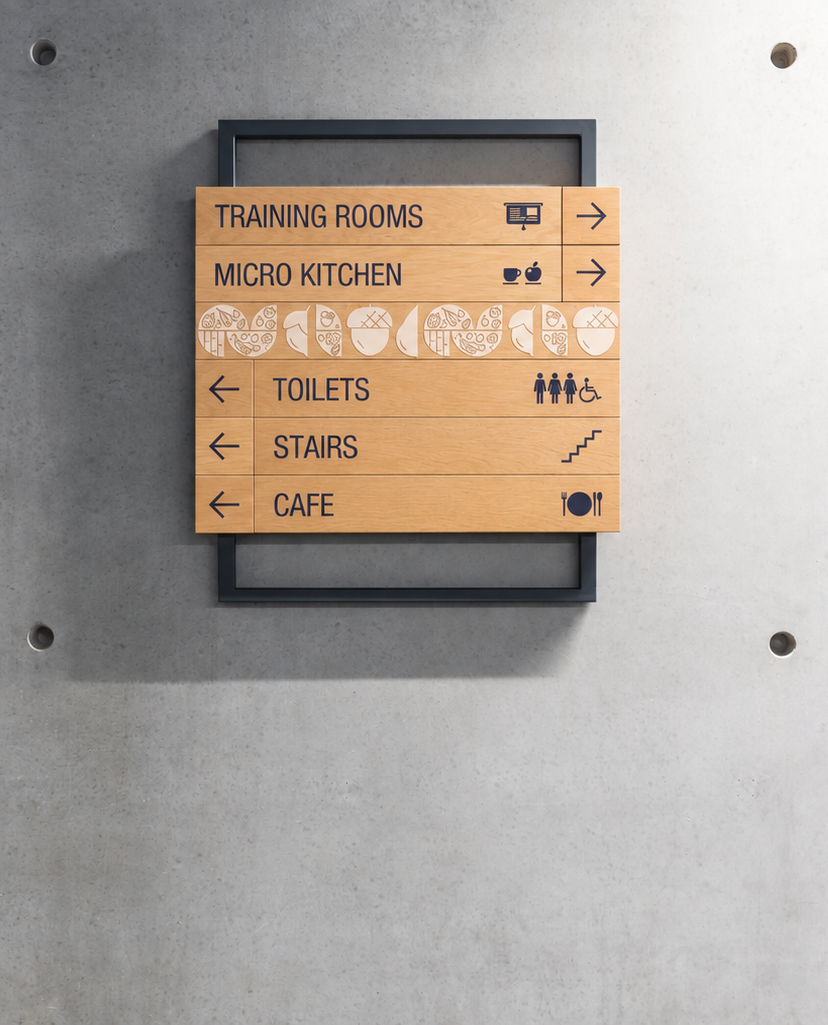
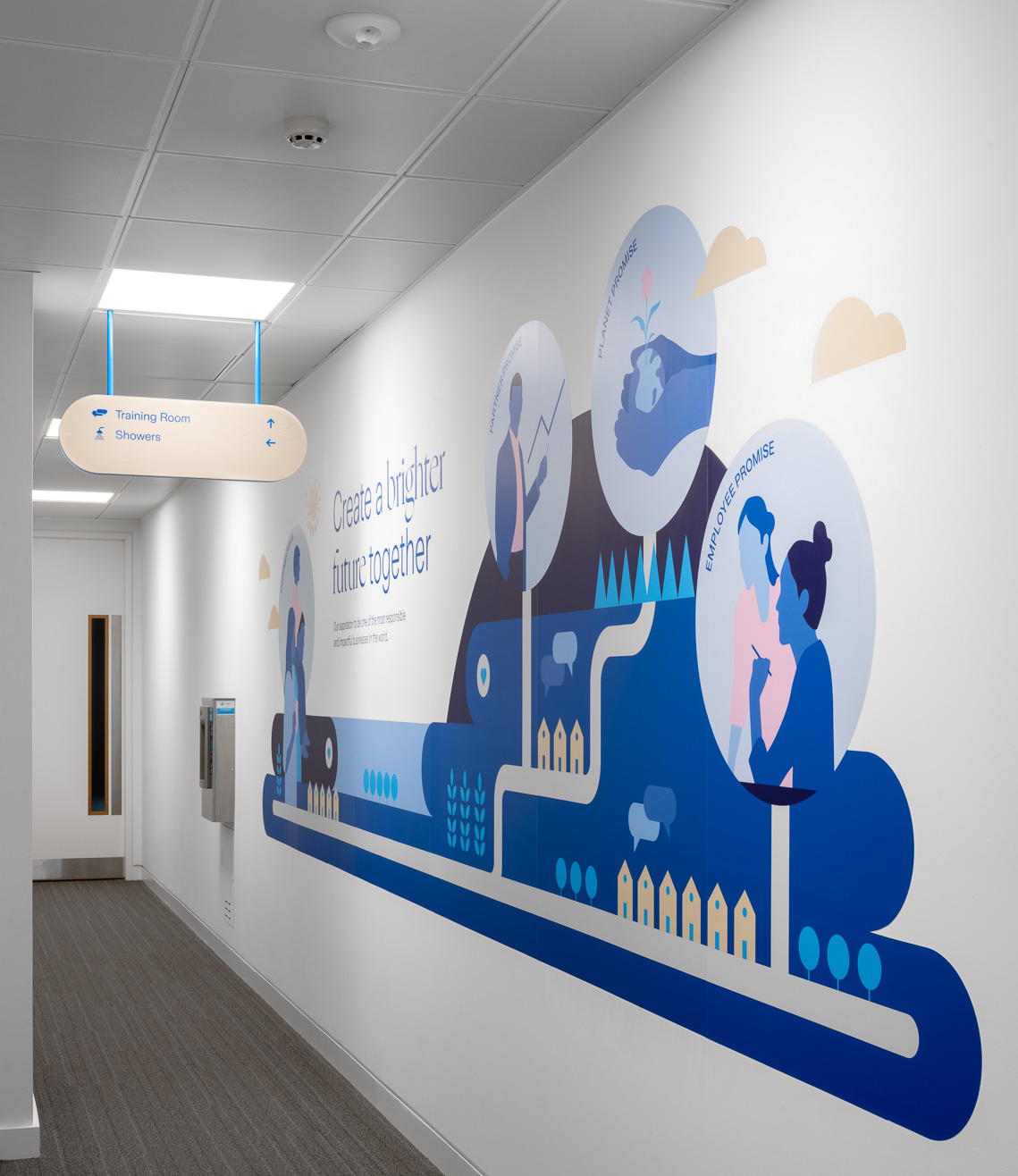
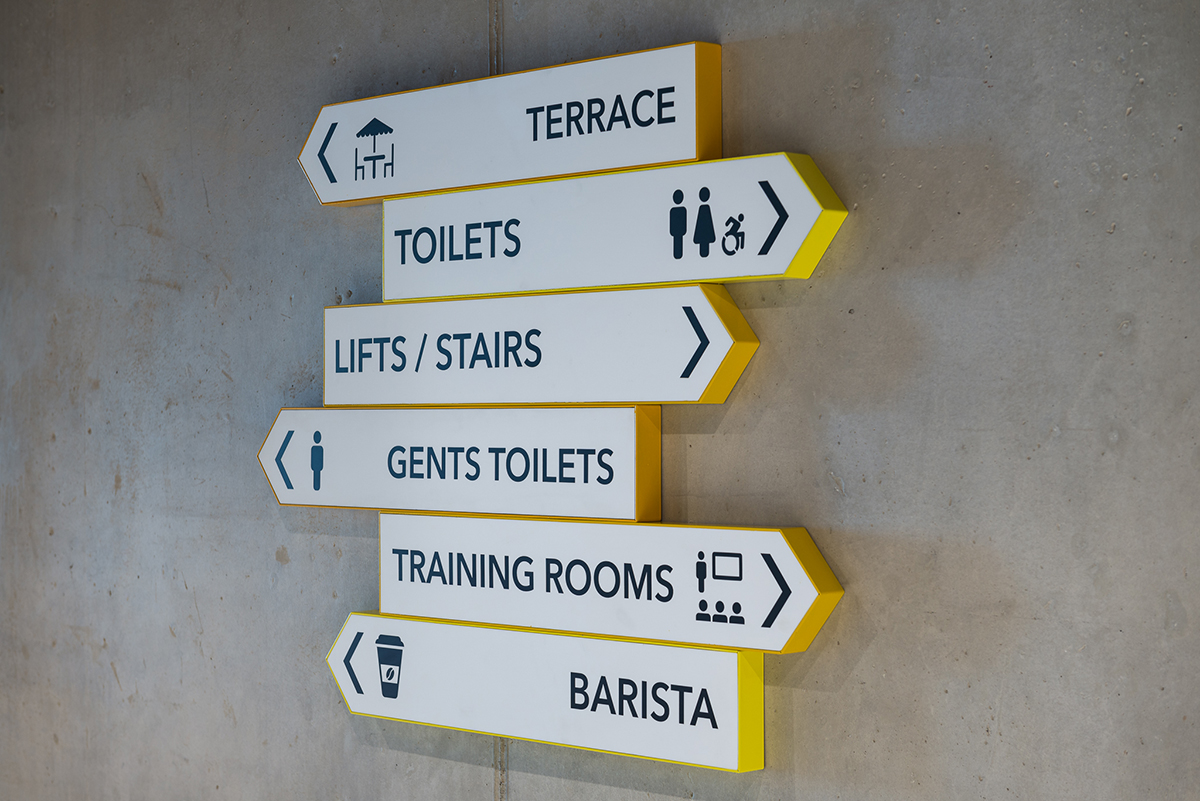
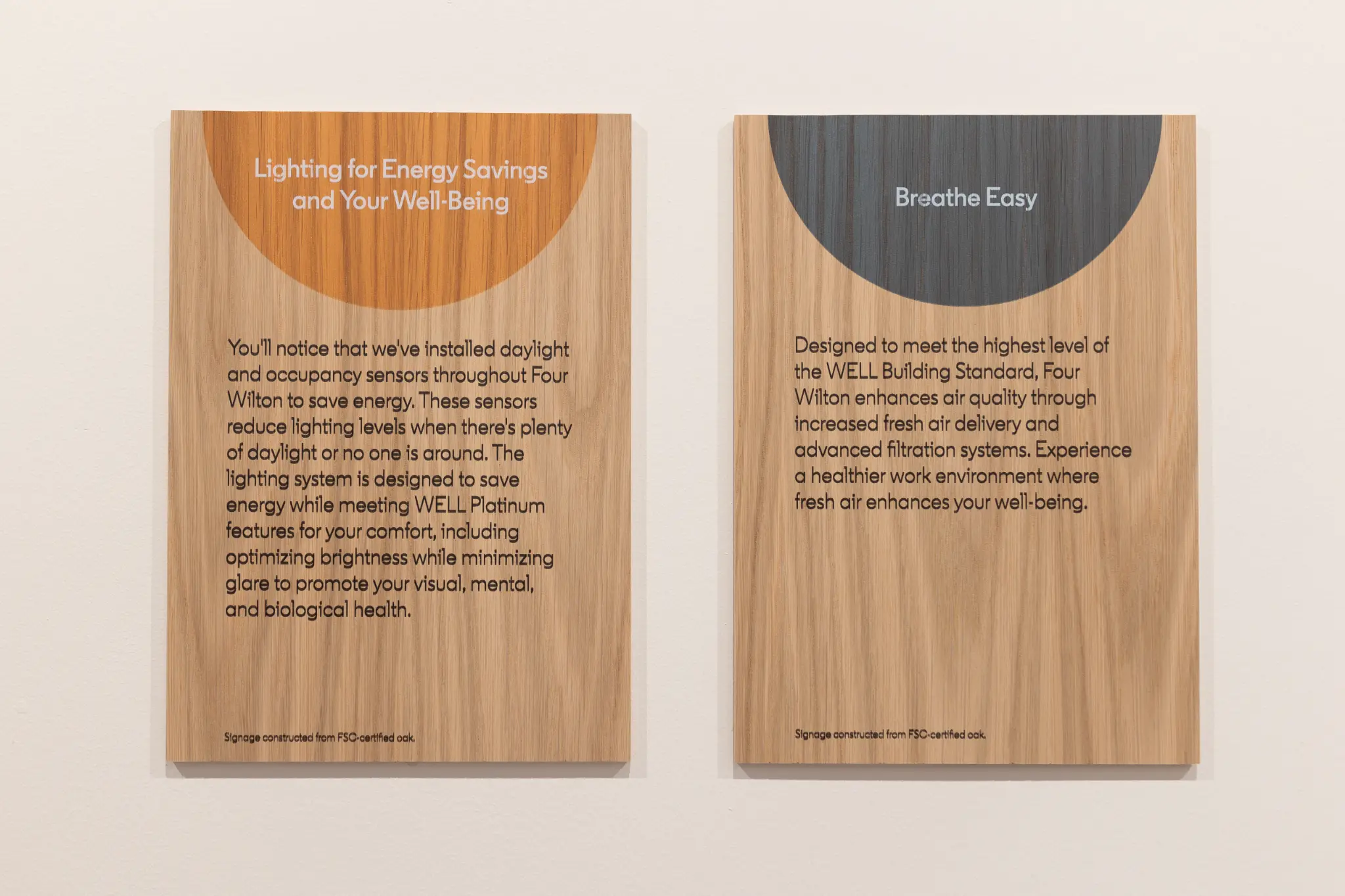
Wayfinding signage system, LinkedIn 1 Wilton Park, Dublin.
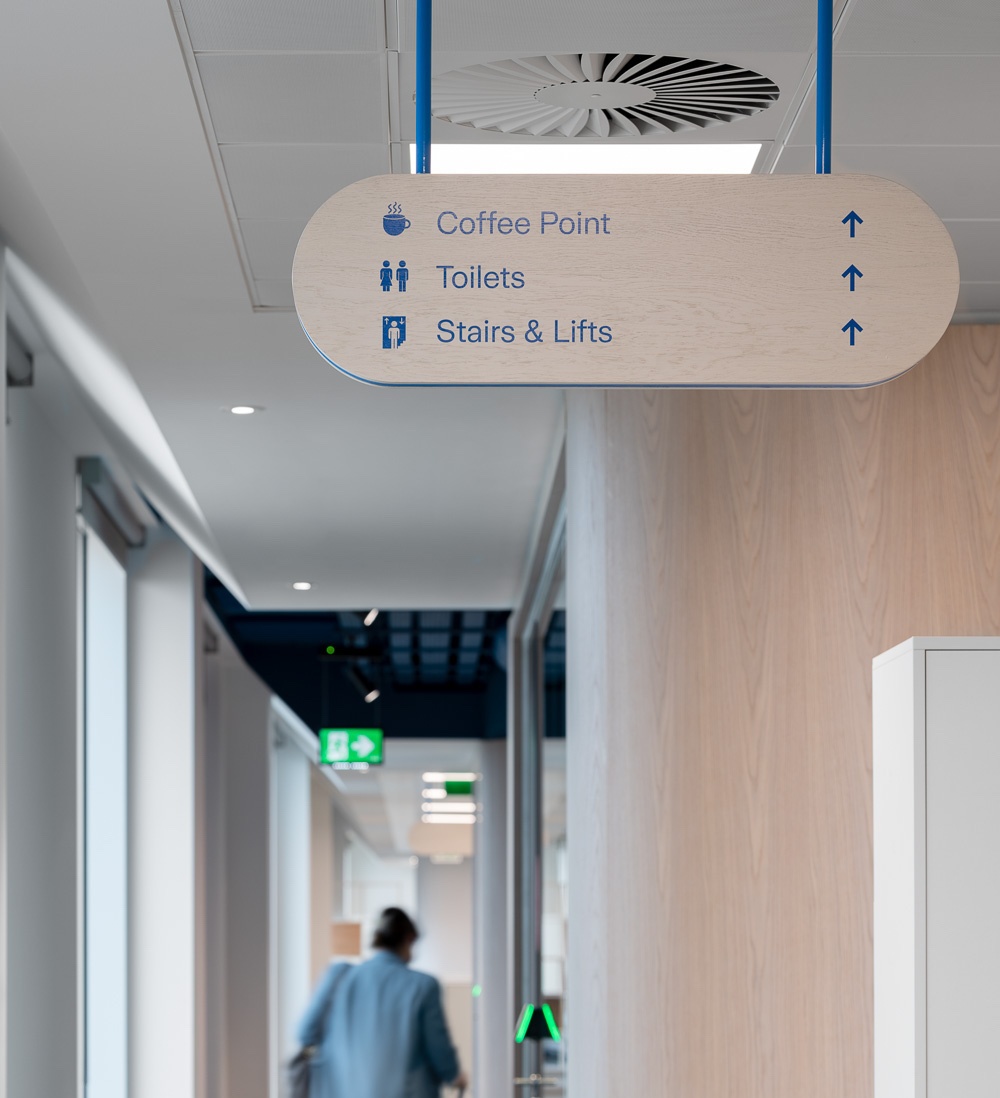
Hanging directional signage, Zurich, Dublin.
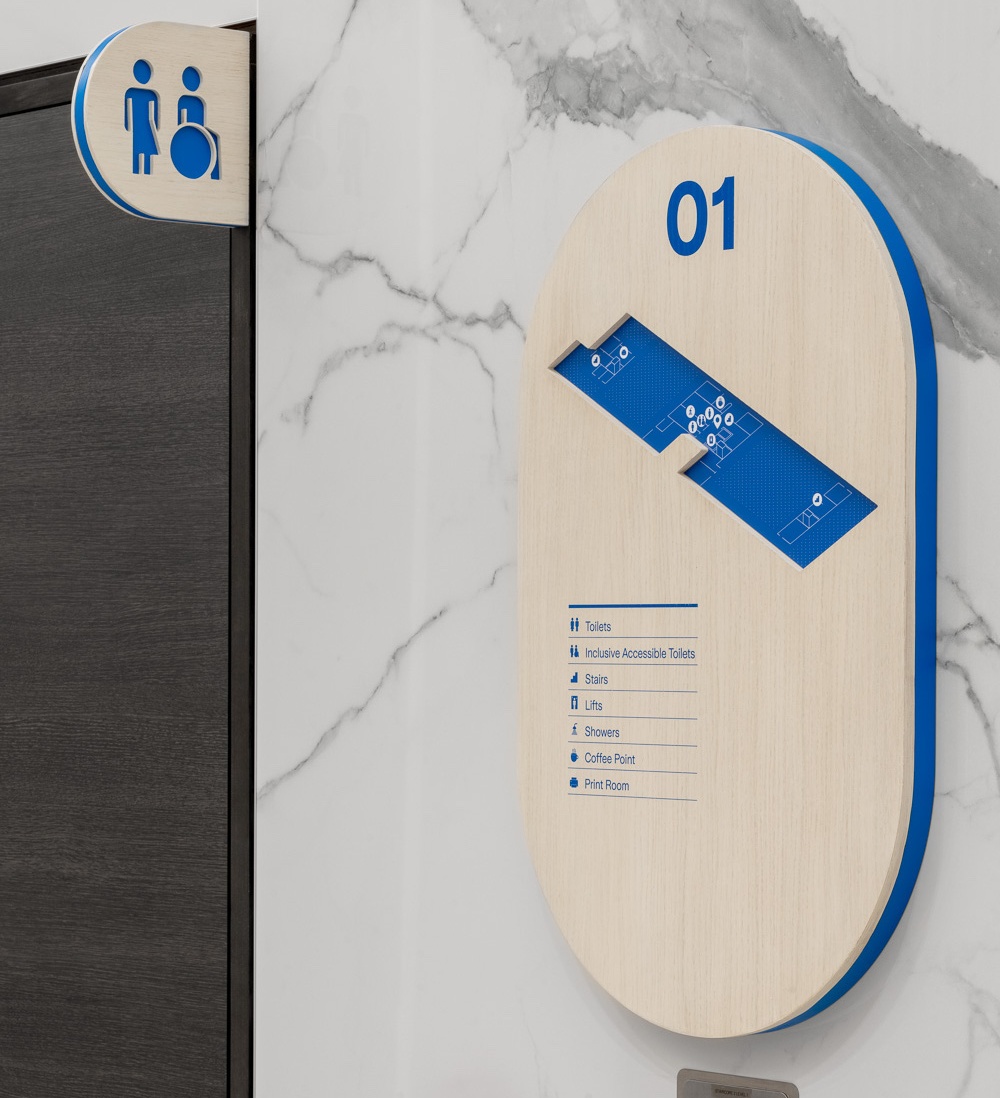
Directional signage and facilities signage, Zurich, Dublin.
Lynch identified five elements that people use to navigate cities: paths, edges, districts, nodes, and landmarks. These same elements apply at the scale of a building. A good wayfinding system works with all five, creating a mental map that users can build and rely upon.
Paths are the routes people travel. Edges are the boundaries that define zones. Districts are areas with a distinct character. Nodes are the decision points - lifts, stairs, entrances. Landmarks are the memorable features that anchor orientation.
A wayfinding system that addresses all five elements creates an environment where navigation is effortless - where people know where they are, where they are going, and how to get back.
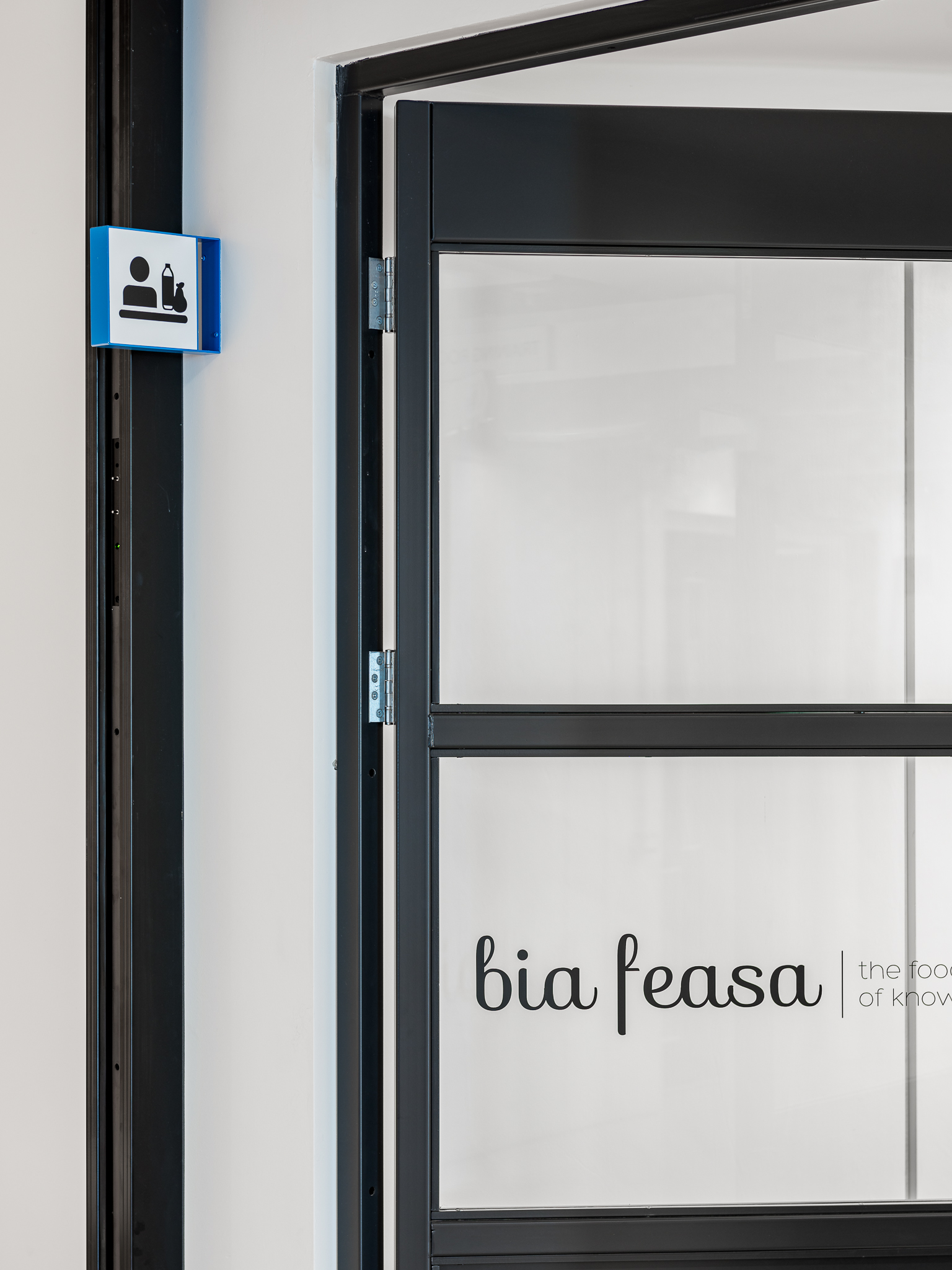
Integrated wayfinding environment, LinkedIn EMEA, Dublin, 2022.
"The best wayfinding is invisible. You arrive at your destination and wonder how you got there so easily."
Seek Design Studio
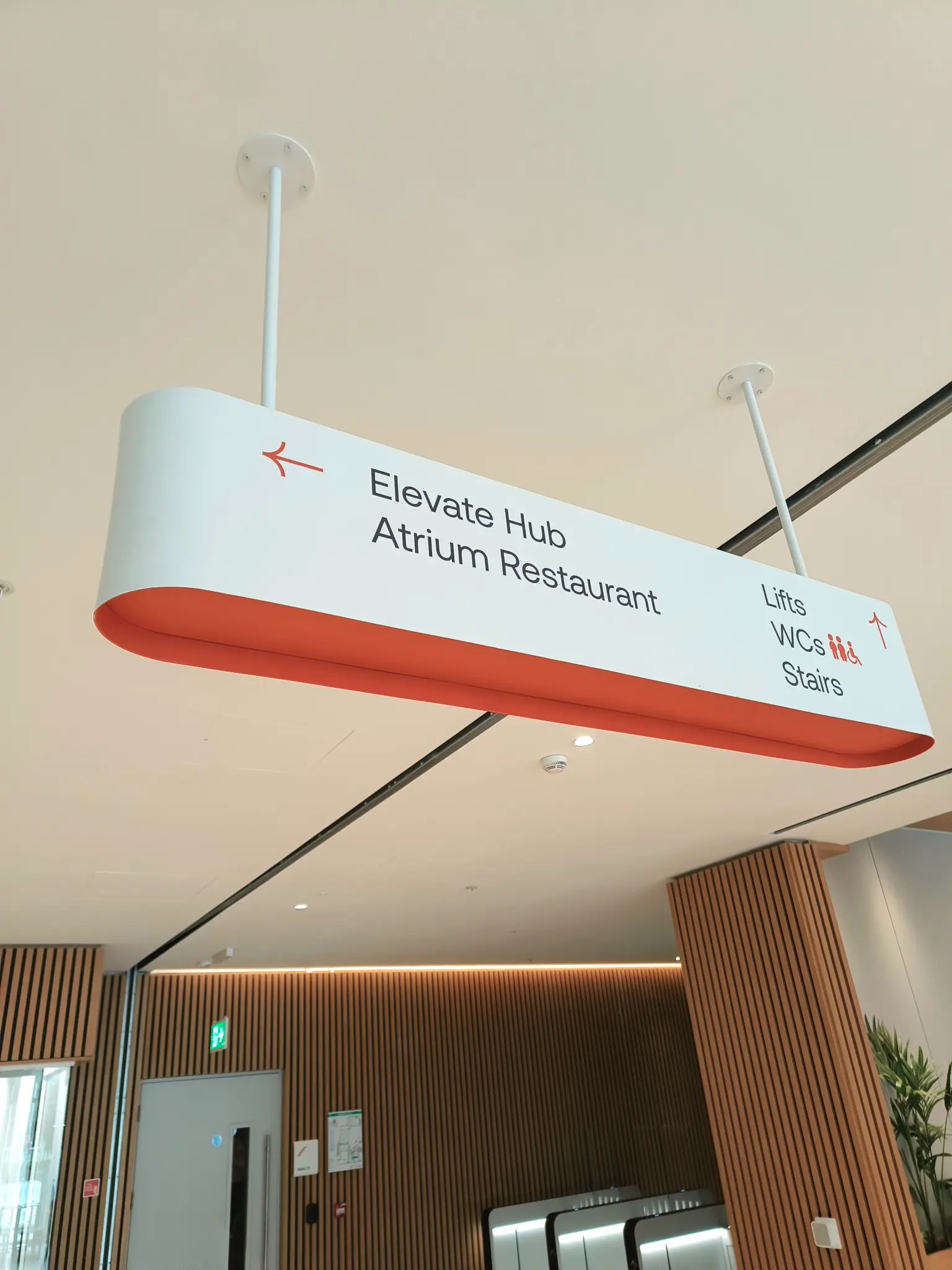
Hanging Directional Signage, Irish Life, Dublin.
Physical signage remains the backbone of any wayfinding system. The design of signs - their typography, hierarchy, placement, and materiality - determines whether a system feels intuitive or confusing. Signs should be legible at the right distance, visible from the right angle, and consistent in their visual language.
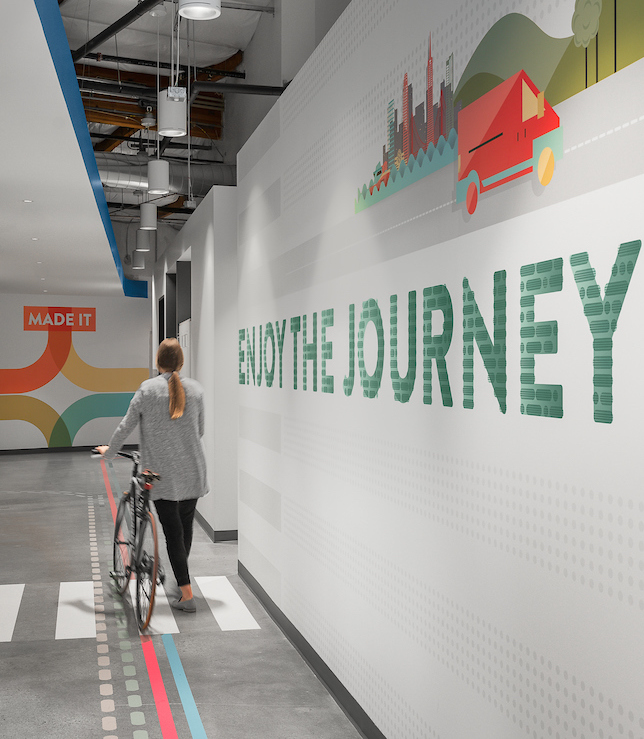
Floor graphics, LinkedIn Silicon Valley
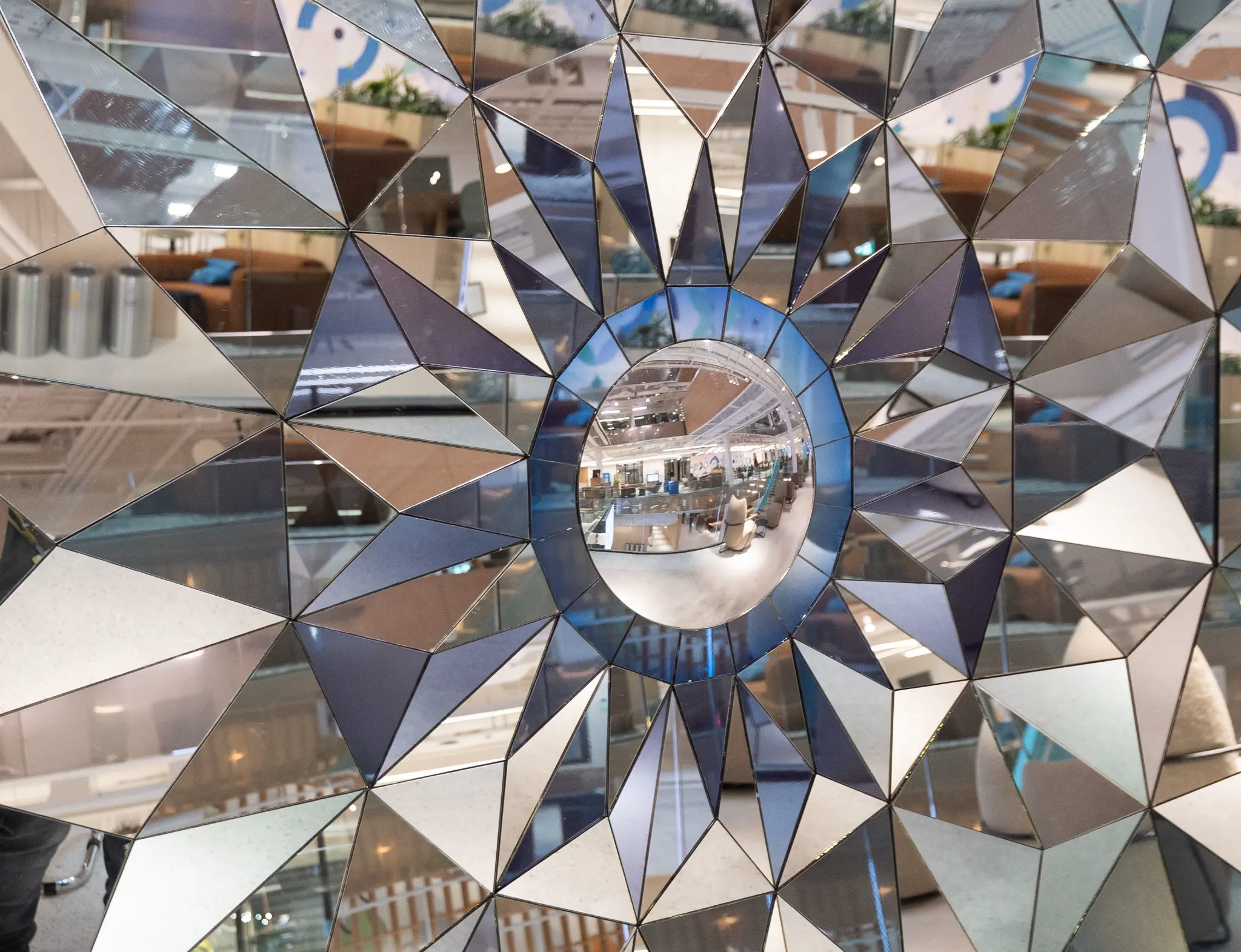
Landmarks are the most powerful wayfinding tool available. A distinctive artwork, a bold colour, a sculptural element - any feature that is memorable and unique to its location can serve as an anchor point for navigation. People remember landmarks and use them to build their mental maps of a space.
The most sophisticated wayfinding systems do more than guide people from A to B. They shape the experience of moving through a space — creating moments of discovery, reinforcing brand identity, and contributing to the overall sense of place.
At Seek Design, we approach every wayfinding project as an opportunity to enhance the spatial experience - to create systems that are not just functional, but beautiful, and not just beautiful, but meaningful.
Related Articles
Interested in our work?
Contact Us