Case Study3 April 2025
How We Designed LinkedIn Dublin: Bespoke Environmental Graphics and Sculptural Installations
Read more
Insights · 12 May 2025
Experiential Graphic Design (EGD) is the practice of integrating graphic design, architecture, and interior design to create meaningful connections between people and the spaces they inhabit.
At its core, EGD is about storytelling through space. It transforms environments — offices, civic buildings, cultural institutions, transport hubs — into places that communicate identity, guide movement, and evoke emotion.
Unlike traditional graphic design, which exists on flat surfaces, EGD is three-dimensional. It considers how people move through a space, what they see at eye level, from a distance, or in passing. It is design experienced over time, drawing on wayfinding, environmental branding, signage systems, murals, sculptural installations, and digital media.
When done well, it is invisible. You feel it before you notice it, in the ease of finding a meeting room, the pause created by a feature wall, or the sense that a workplace or transport hub genuinely belongs to the people moving through it. That invisibility comes from decisions made early and carried through in detail, from the language of a wayfinding system to the materials of a single wall.
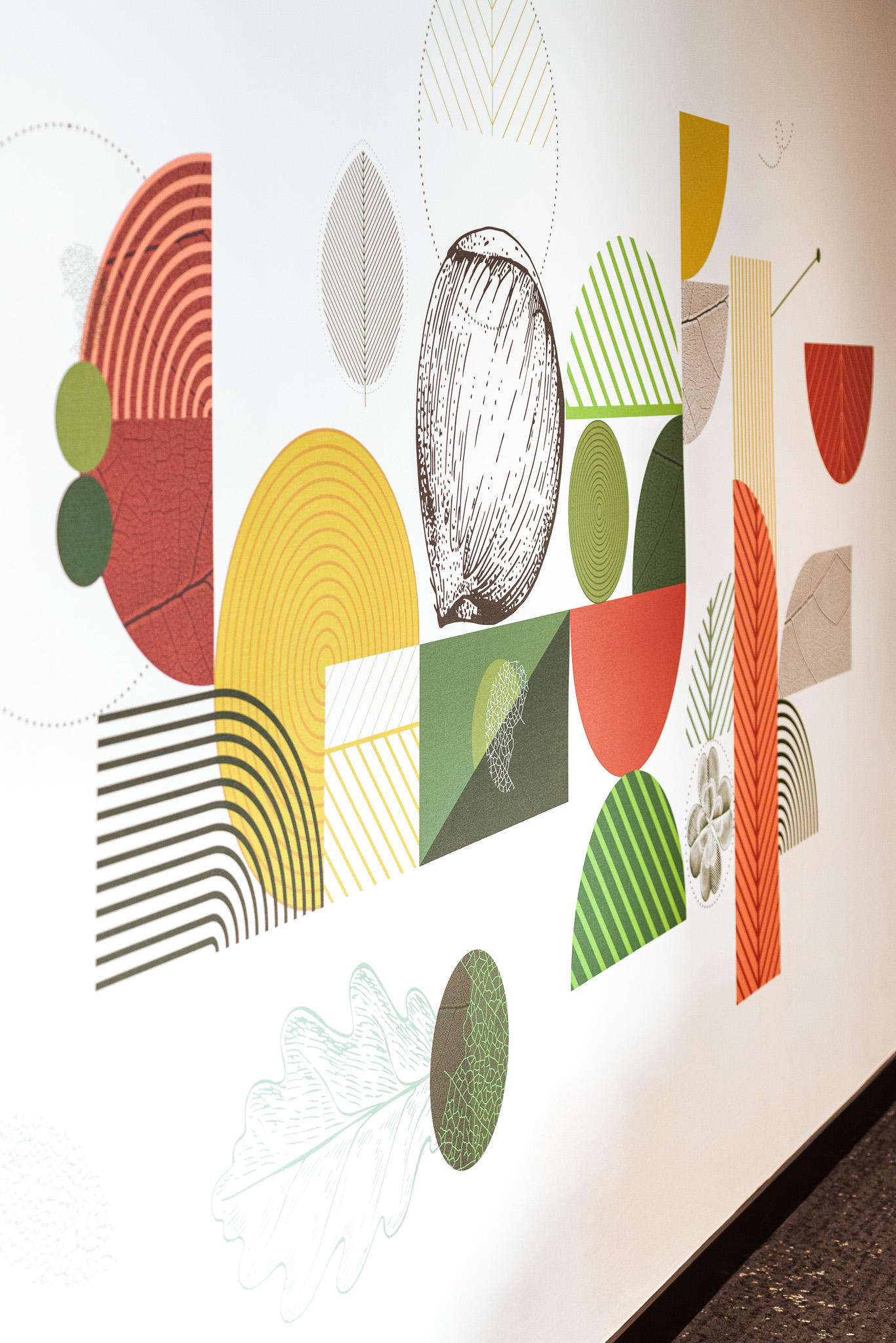
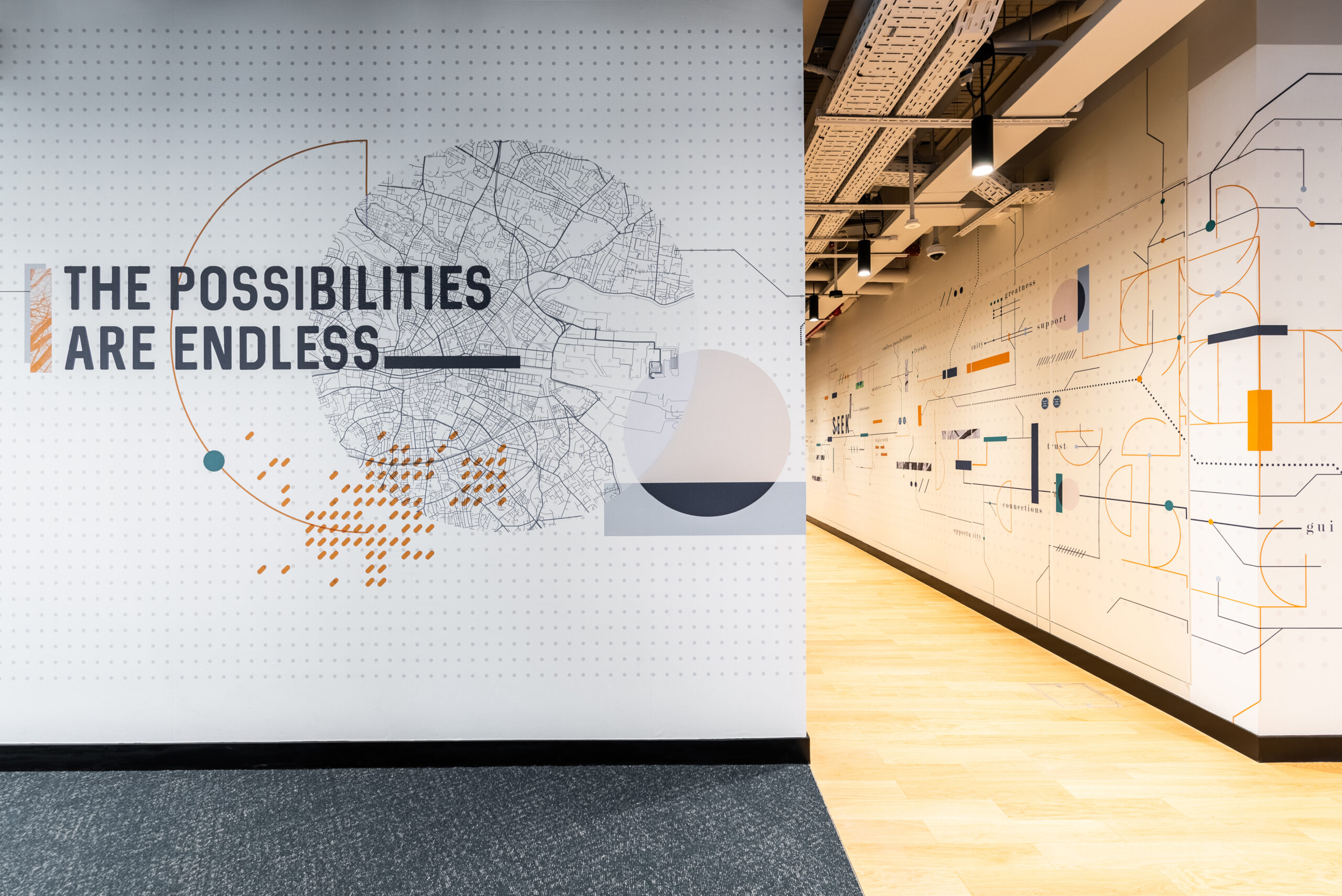
Environmental graphics at LinkedIn's Dublin campus, designed to reflect Irish heritage and the company's global identity.
Wayfinding installation, LinkedIn 1 Wilton Park, Dublin.
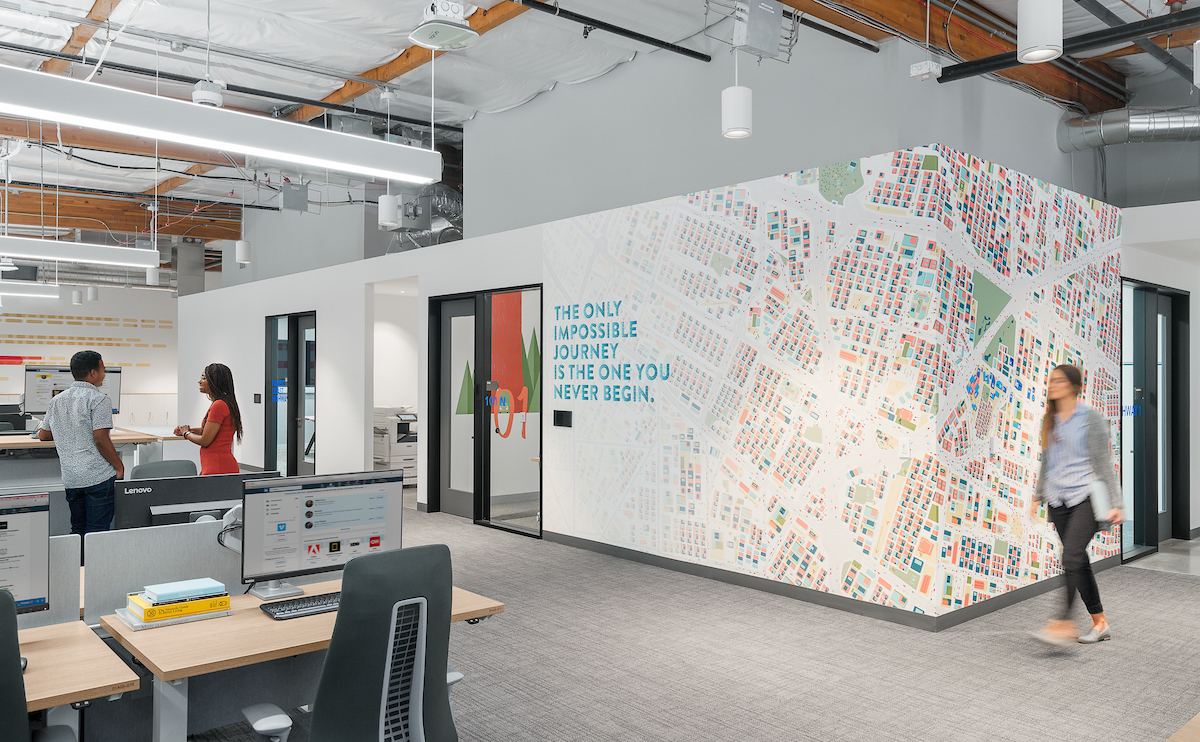
Interior wall graphics, LinkedIn Sunnyvale California
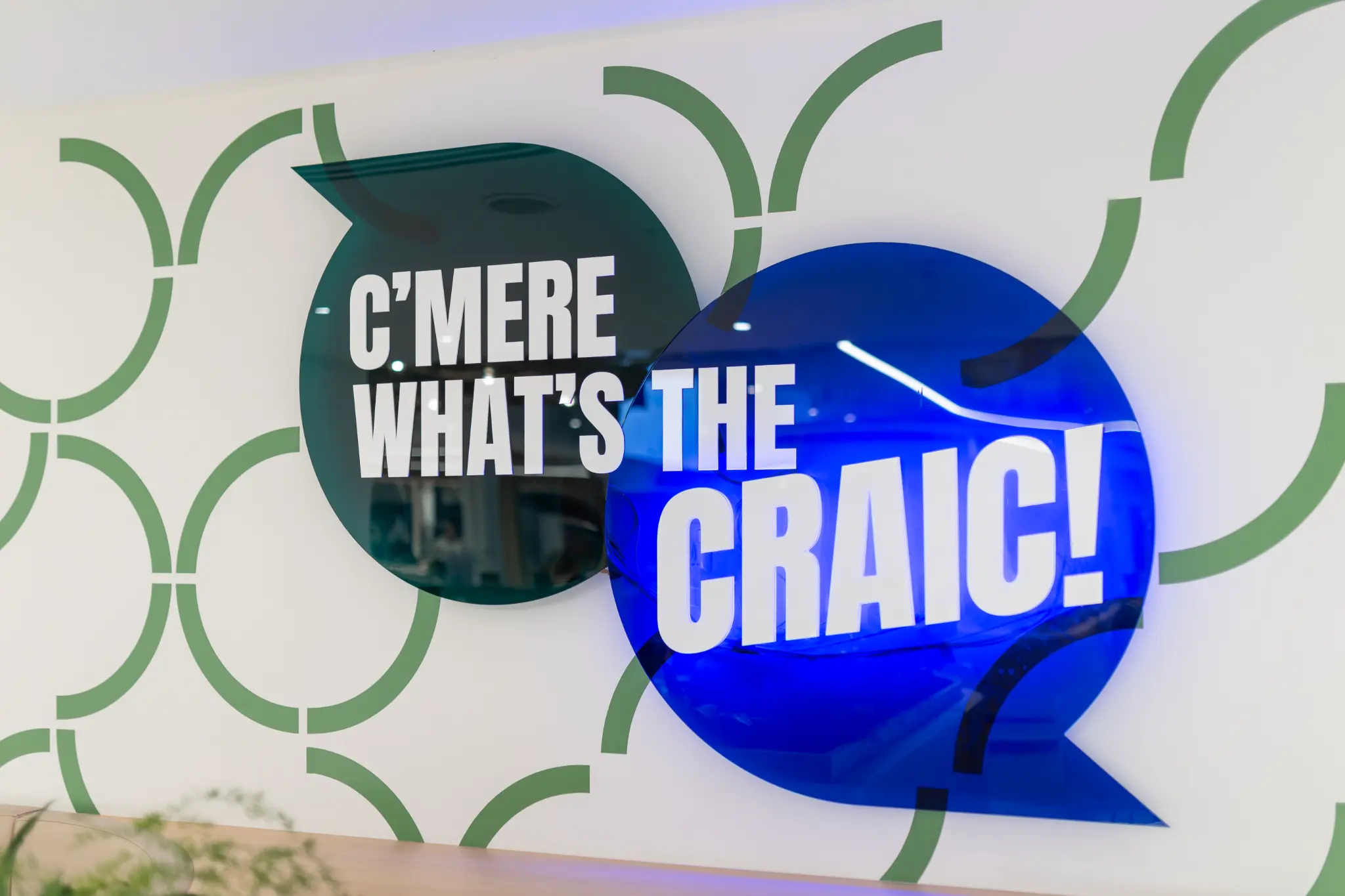
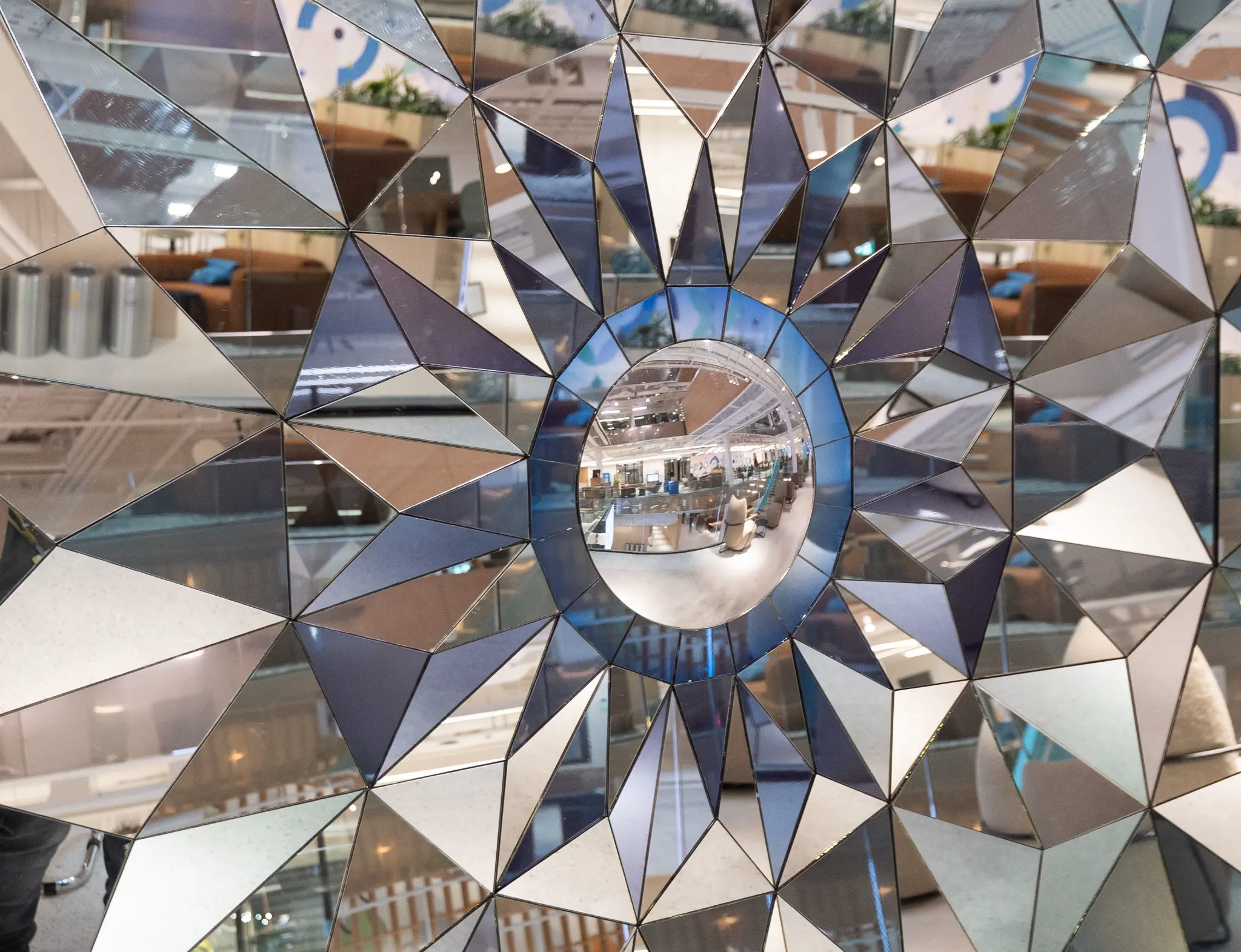
Sculptural signage installation, LinkedIn 4 Wilton Park
The most effective experiential graphic design emerges when designers are involved from the earliest stages of a building project. When graphics and architecture are conceived together, the result is a space that feels coherent - where the walls, floors, signage, and artwork all speak the same language.
More often, graphics are applied after construction - a process that tends to produce disconnected, superficial decoration rather than genuine spatial storytelling.
At Seek Design, we work alongside architects and interior designers from the concept phase, ensuring that every graphic element - from a wayfinding system to a large-scale mural - is integral to the space rather than applied to it.
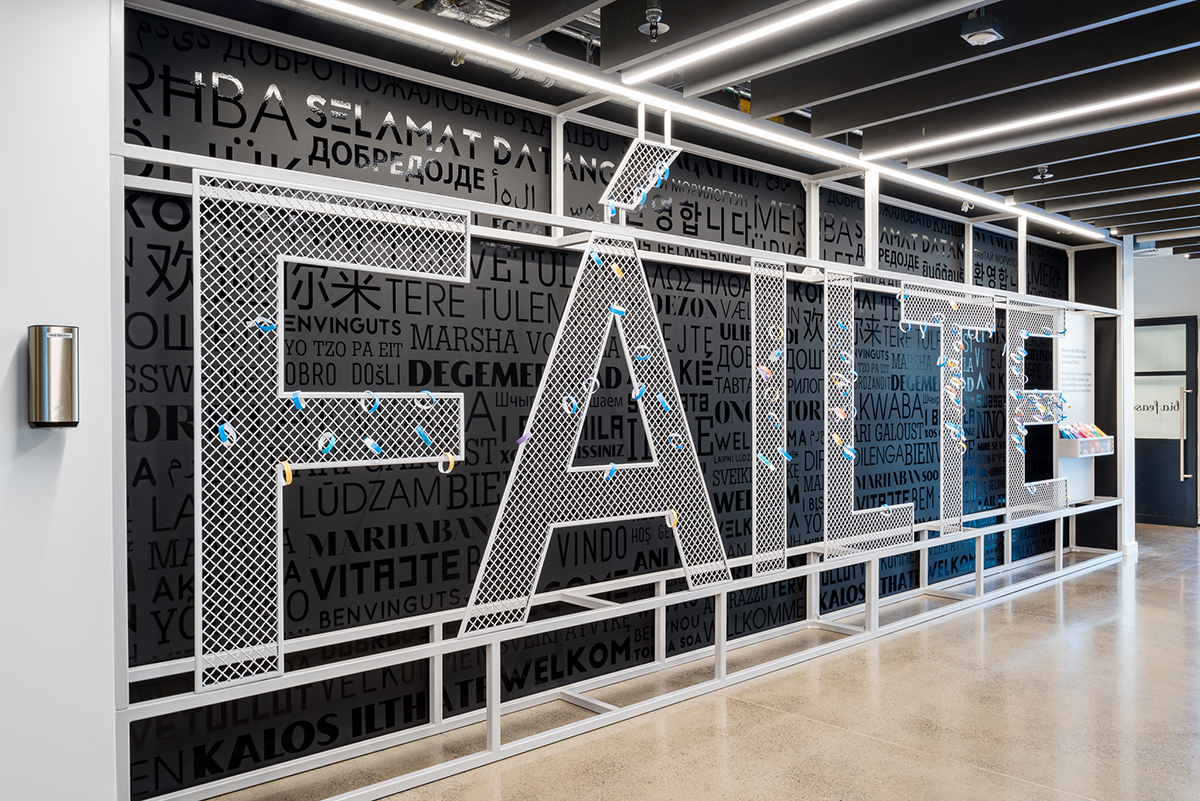
Interactive "Fáilte wall" LinkedIn EMEA office, 5 Wilton Park, Dublin.
"The best experiential graphic design is invisible. You feel the space before you read it."
Seek Design Studio
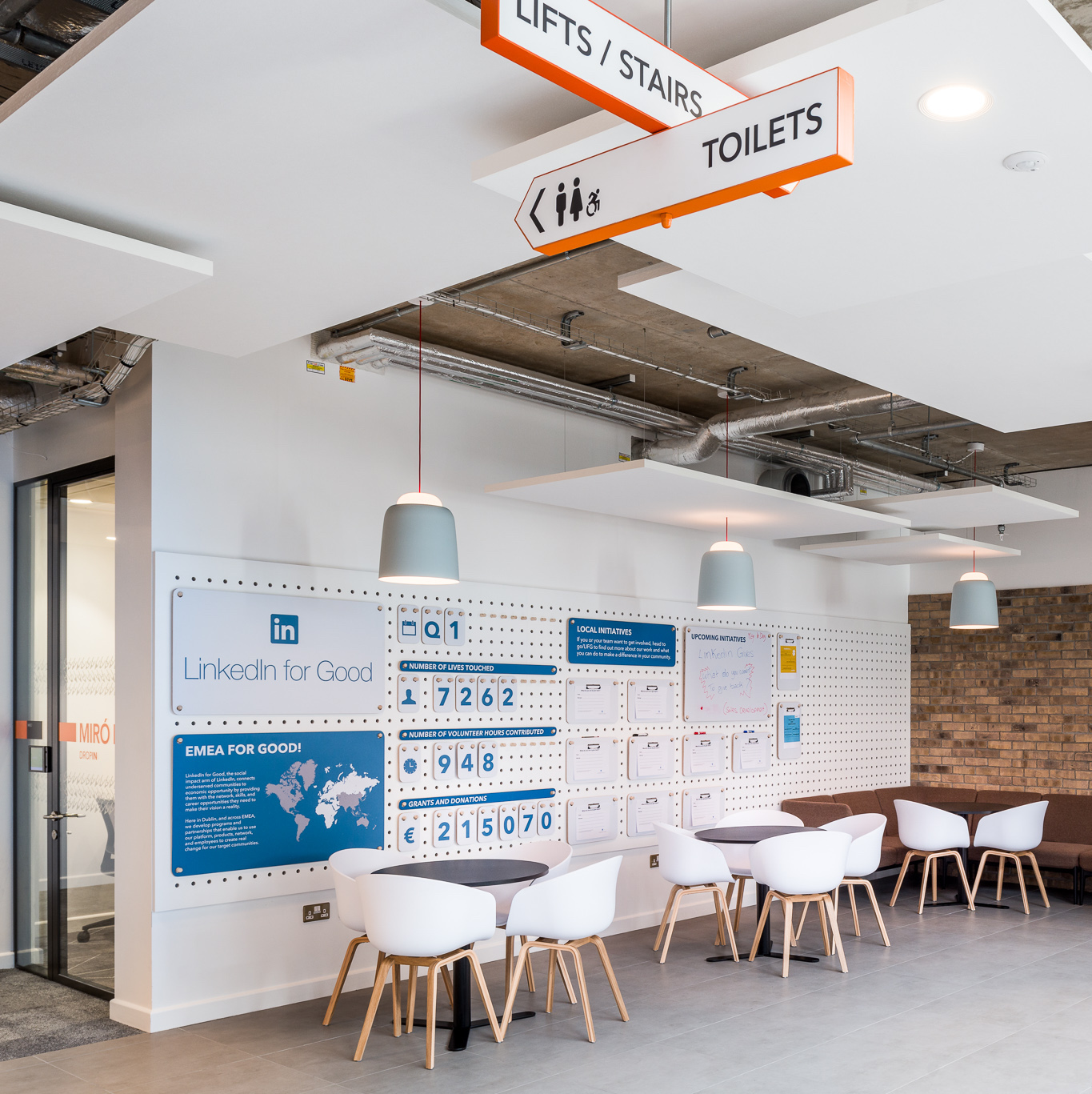
Wayfinding system, LinkedIn EMEA office, Dublin
Wayfinding is the foundation of EGD. It encompasses all the systems - maps, signs, floor markings, digital displays - that help people navigate a space confidently. Good wayfinding is intuitive; great wayfinding is beautiful.
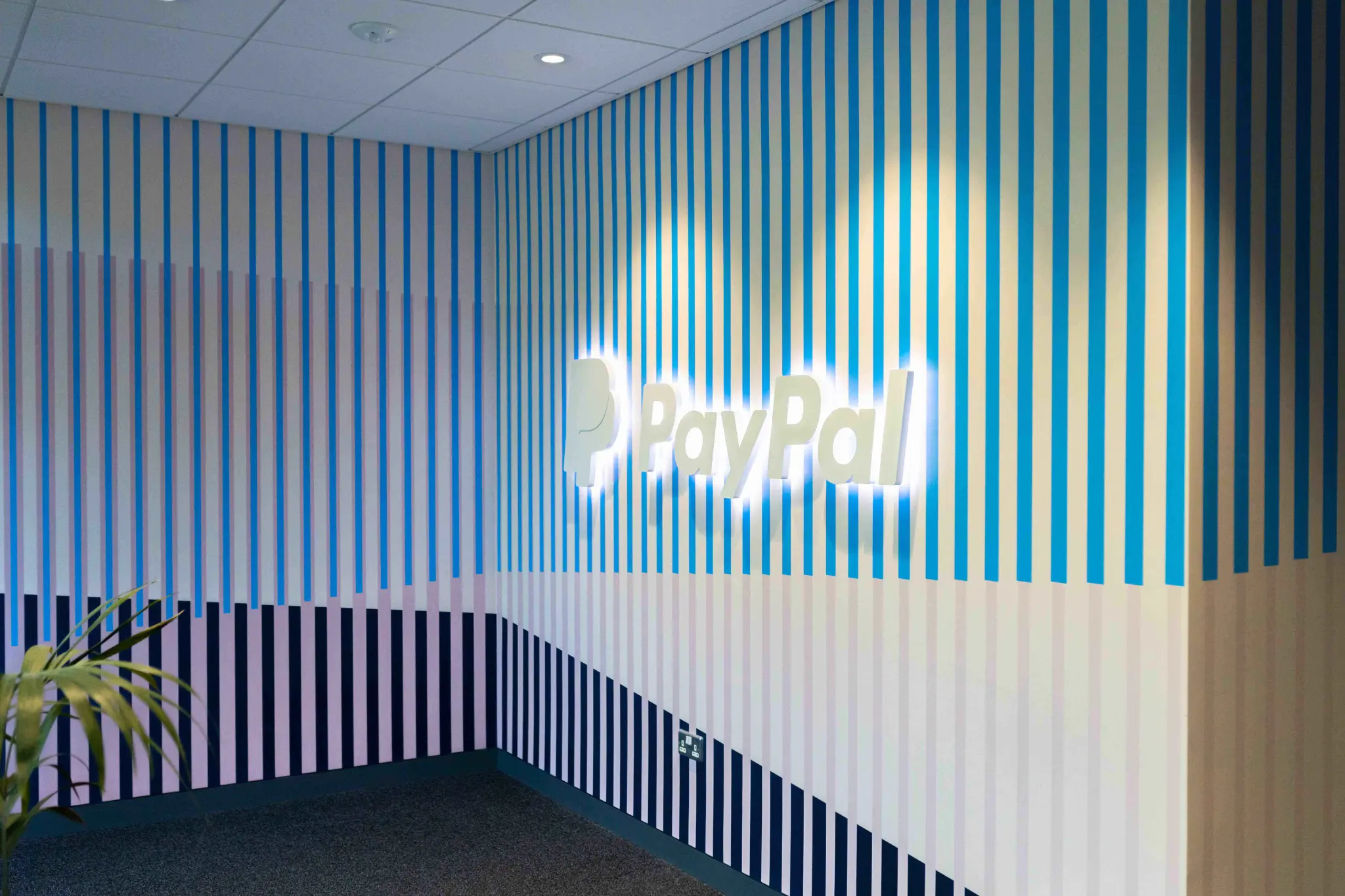
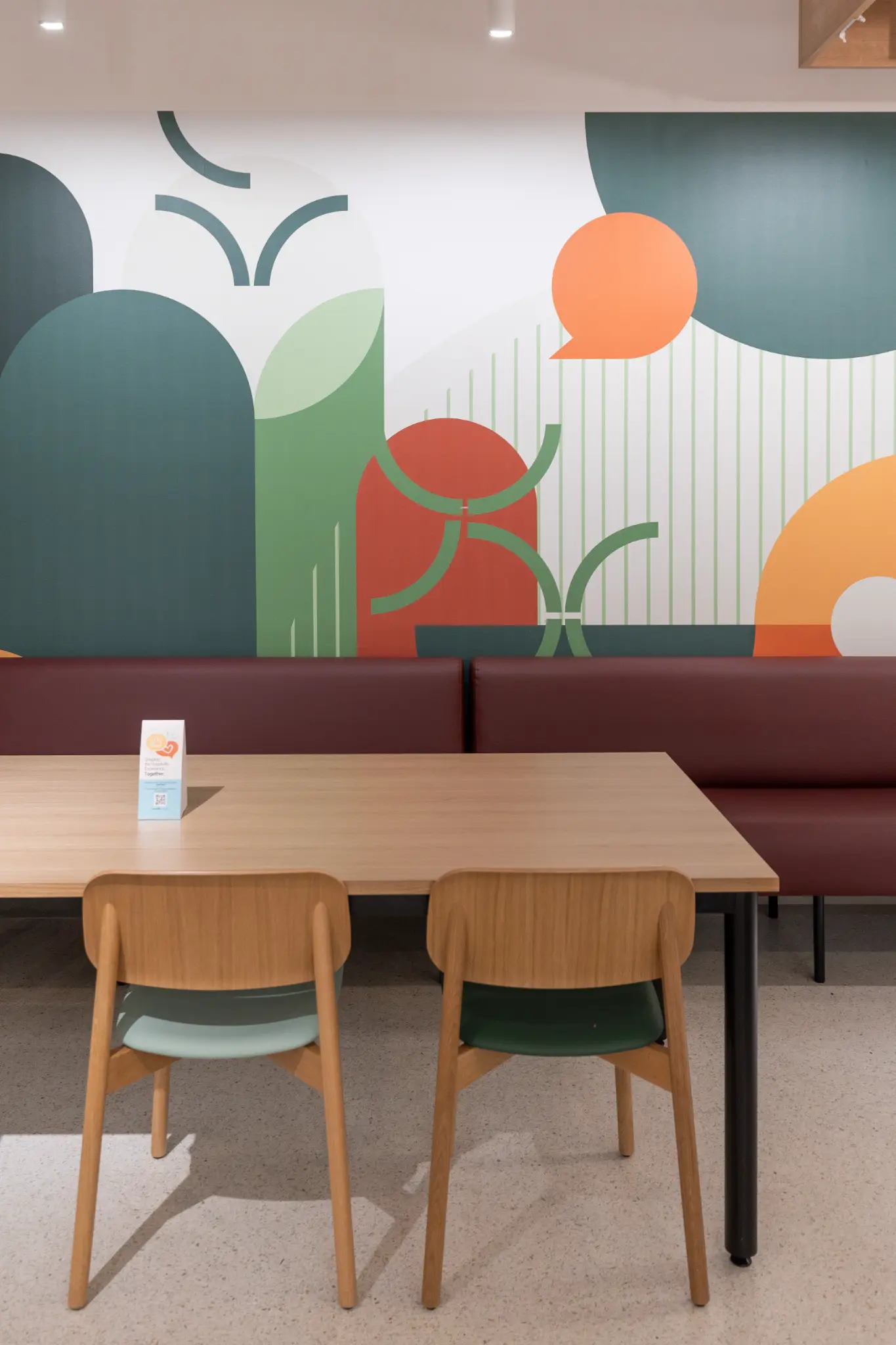
Environmental branding, Paypal, Dublin
Environmental branding translates a company's visual identity into three-dimensional space. It goes beyond applying a logo to a wall - it considers how brand values, culture, and narrative can be expressed through materials, scale, and placement.
As organisations compete for talent and customers, their physical environments carry more weight than before. A well-designed workplace communicates values. A thoughtfully branded civic space builds community. An intuitive transport hub reduces friction for the people moving through it.
Experiential Graphic Design is the discipline that makes this possible - connecting people to places through design that is felt as much as it is seen.
Related Articles
Interested in our work?
Contact Us